How do you describe the music of Brahms? That very question has had both audiences and critics alike searching for an answer, and has often divided them into fiercely opposing camps along the way…
Do you like Brahms?
That title of a recent festival of Brahms’s music in London’s Barbican points to a problem with the composer. At one level, Brahms’s position in the pantheon of great composers is absolutely secure. Everyone acknowledges the mastery of this composer who would write learned canons and fugues for fun. But some doubt that Brahms had that other quality necessary to the great composer, the burning inspiration and daring that justifies all the hard-won technique.
Johannes Brahms
Though everyone respects Brahms, not everyone loves him. There’s something about the dark and often thorny sound of his music which seems to repel easy affection. For players, it can often feel wilfully difficult under the hands. Like the man himself, Brahms’s music seems to delight in being prickly.
And yet – again like the man himself – the stern surface hides a wealth of tender feeling. There are few more intimate utterances in all music than the late piano Intermezzos, and few more radiantly joyous ones than the great G major Sextet. More precious for those who love his music are those ambiguous, understated states of mingled joy and sorrow that run through so many of his works.
‘Understated’ can be a euphemism for inhibited and buttoned-up, two epithets often applied to Brahms. But for those who love the music, it’s precisely Brahms’s suspicion of ‘letting go’ that make him treasurable. Brahms’s refusal to revel in straightforward states of feeling and his craftsman’s pride in making every piece as perfect as it could be are two sides of the same coin. They show an unflinching respect for truth, both musical and emotional. Brahms is a model of what a proper, grown-up composer should be, which is why, in an era which prefers quick gratifications, his music now seems peculiarly precious. It epitomises what classical music stands for.
Over the following six pages, three leading writers – Ivan Hewett, Bayan Northcott and Jessica Duchen – take a look at the essence of this enigmatic composer. In short, they ask, ‘What is it that makes Brahms Brahms?’.
Brahms the composer
Morning rituals, regular pub visits and the outdoors all helped Brahms find inspiration
Brahms was dismissive of the Romantic notion of inspiration. ‘A thought, an idea, is simply an inspiration from above, for which I am not responsible,’ he remarked. ‘It is a present, a gift, which I ought even to despise until I have made it my own by right of hard work.’ And hard work, the ceaseless pursuit of mastery, was the rule of his life.
Beethoven
Habitually rising at dawn, he would dose himself with a poisonously strong cup of black coffee, smoke an equally strong cigar, then play a Bach fugue or complete a counterpoint exercise or two to get his mind in gear, and compose steadily through a long morning, taking a late lunch at a local hostelry and then a long afternoon walk. When he was in Vienna and not conducting or playing, the evening might find him at the opera or theatre, of which he was an avid fan. Much of his creative work, however, was done on extended summer holidays at a succession of Austrian spas and lakes, where he could wander at ease in shirtsleeves and no tie. Once a work was in draft, he would invite the comments of a few trusted friends, Clara Schumann above all, sometimes taking their advice, sometimes not. Confessing to Joseph Joachim that, ‘My things really are written with an appalling lack of practicability,’ he allowed the great violinist to rejig extensively the solo part in the Violin Concerto (1878).
Clara Schumann
Sometimes his incessant urge to improve would extend beyond the first performance: the German Requiem (1867) acquired an additional movement and the First Symphony was extensively revised. ‘I never cool down over a work, once begun, until it is perfected, unassailable,’ he claimed. One early work, the rhapsodic Piano Trio No. 1 (1854), he totally recomposed as late as 1889. And when he finally committed a score to print, he would habitually do away with the sketches, as if to forestall future scholars prying into all his doubts and reworkings. Almost the only complete set of sketches he seems to have kept was for the Variations on a Theme of Haydn (1873), a work that was especially close to his heart.
It is not least characteristic of Brahms’s view of the composer as a consecrated craftsman that, around 1890, he actually spoke of retiring, telling his friends that his radiant String Quintet No. 2 would be his last work. But it only needed the melting artistry of the clarinettist Richard Mühlfeld to set him going again – until the shock of Clara Schumann’s death inspired the stoical Four Serious Songs (1896) that presaged his own demise.
Classical or Romantic?
Brahms expressed a good deal of passion in his music, but counterpoint was never far behind
Brahms can seem the strictest, most structure- driven composer of the late 19th century. A perfectionist – he burned many works with which he was not satisfied – he adhered to principles of form and counterpoint that would have been familiar to Beethoven, even to Bach (ie the closing passacaglia of Symphony No. 4). Yet the spirit he encases in these forms remains Romantic. Brahms’s personal voice is rich in texture: soaring, impassioned, raw in its tenderness. Brahms’s writing, generally speaking, grew more restrained as he grew older. His early works were another matter. Literary inspiration is supposedly antithetical to the ‘pure music’ on which he later focused. But at the age of 20 he based the first of his Op. 10 Ballades for piano on the Scottish ballad Edward, Edward; and in the Piano Sonata No. 3 (1853), he quotes a love poem by CO Sternau at the head of the Andante second movement.
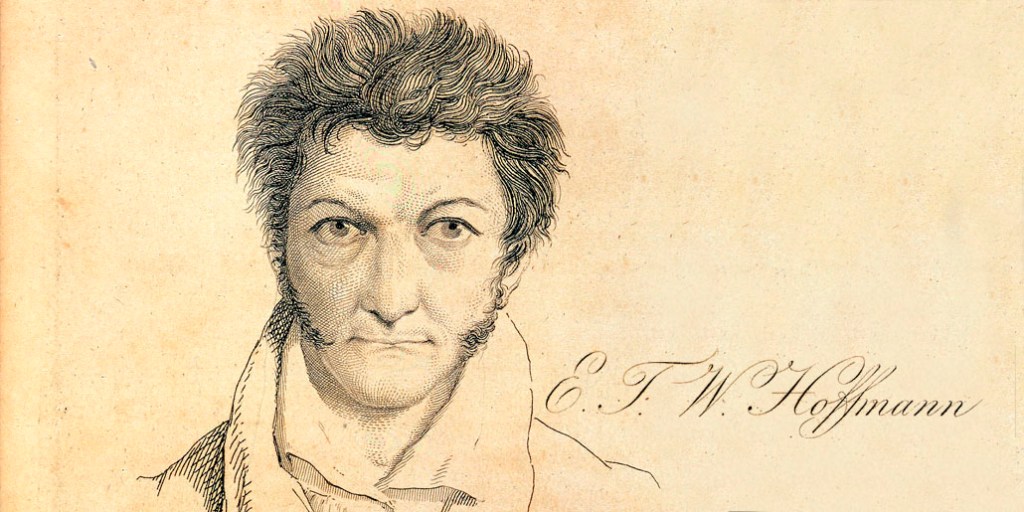
He identified with ETA Hoffmann’s fictional Johannes Kreisler – an idealistic Kapellmeister, also inspiration for Schumann’s Kreisleriana – often referring to himself as ‘Kreisler’ in his letters. As for Romantic sentiments, try Goethe’s The Sorrows of Young Werther: for the Piano Quartet No. 3 (1875), Brahms told his publisher that the ideal cover illustration would show Goethe’s eponymous hero pressing a gun to his own head.
Under the spell of Robert and Clara Schumann, the youthful Brahms began to use musical ciphers – notes that stand for the letters of words. The idea goes back to Bach; Schumann and Brahms, though, used the idea within a Romantic ethos to express personal, emotional connections, rather than religious symbolism. Prime here was Brahms’s recurring motto F-A-F – ‘frei aber froh’, free but happy. This was a slogan derived from his friend Joseph Joachim’s equivalent, F-A-E – ‘frei aber einsam’, free but lonely. Elsewhere, his music is peppered with references to Clara. The second movement of the Piano Concerto No. 1 (1858) is a type of requiem for Schumann, its melody setting the words ‘Benedictus qui venit in nomine Domini’; he once wrote to Clara that this movement was a ‘tender portrait’ of her. The powerful horn solo in the introduction to the First Symphony’s (1876) finale apparently derives from an alphorn melody that he heard in Switzerland; he included it in a postcardto Clara in 1868, setting the words: ‘Hoch auf’m Berg, tief im Tal, grüß ich dich, viel tausendmal!’ (High in the hills, deep in the valleys, I greet you many thousand times).
Ironically, perhaps, Clara’s rather non- experimental musical tastes, besides increasing divisions from the ‘progressive’ Romantics Liszt and Wagner, may have prompted Brahms’s later inclination towards supposedly ‘pure’ music. He rejected Robert Schumann’s tendency to rhapsodic stream- of-consciousness writing almost as if rejecting that composer’s unfortunate fate. In his Clarinet Quintet (1891), he achieved perhaps the perfect blend of form and content: this introverted, emotional music is cradled within a construct of absolute classical rigour.
So is Brahms Classical or Romantic? In fact, he’s a supreme blend of both.
Divided Opinions
What others thought of Brahms
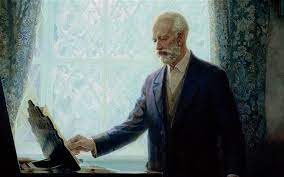
I have been studying Brahms’s … symphony [No. 1]; My view is that it is sombre and cold, and full of pretensions to being deep without real depth.’
Pyotr Tchaikovsky (letter to Nadezhda von Meck, 1877)
I have been studying Brahms’s … symphony [No. 1]; My view is that it is sombre and cold, and full of pretensions to being deep without r‘I know a famous composer you can meet at concert masquerades… today disguised as a ballad singer, tomorrow in Handel’s Hallelujah Wig, another time as a Jewish Czardas fiddler, and again as a veritable symphonist got up as No. 10.
Richard Wagner (On Poetry and Composition, 1879)
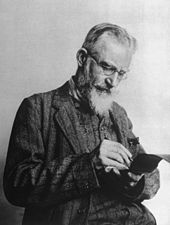
I have been studying Brahms’s … symphony [No. 1]; My view is that it is sombre and cold, and full of pretensions to being deep without realHis [German] Requiem is patiently borne only by the corpse.
George Bernard Shaw (above, The Star, 1894)
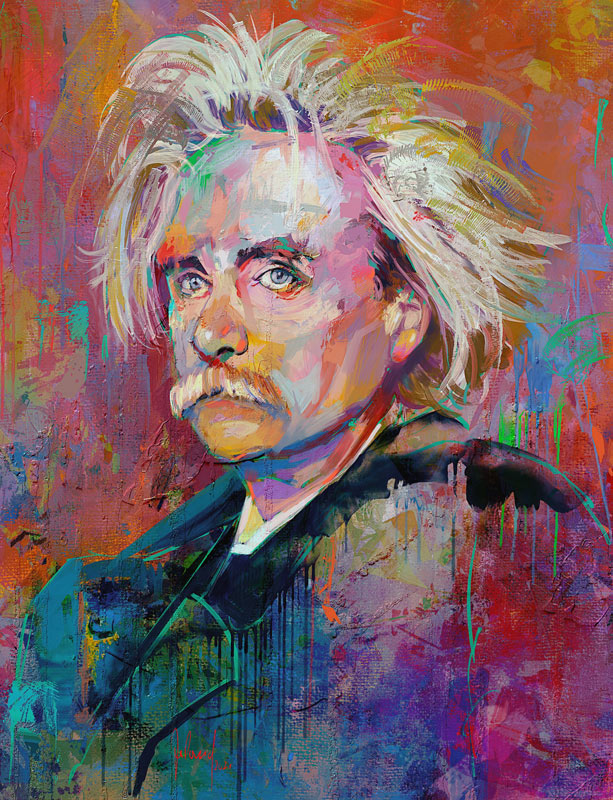
‘A landscape, torn by mists and clouds, in which I can see ruins of old churches, as well as of Greek temples – that is Brahms.’
Edvard Grieg (letter to Henry Finck, 1900)
‘I have a great feeling for Brahms; you always sense the overpowering wisdom of this great artist even in his least inspiring works.’
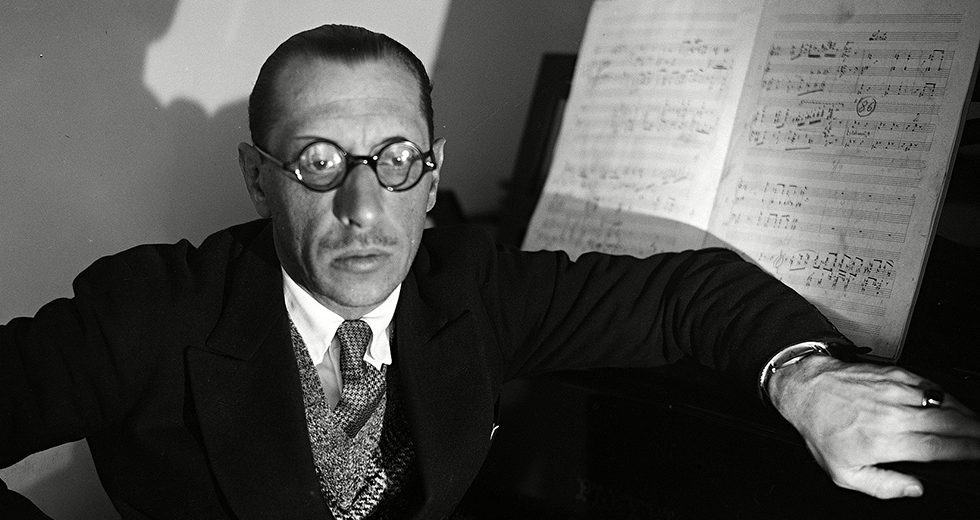
Igor Stravinsky (interview in the Boston Herald, 1939)
‘It is the purpose of this essay to prove thatBrahms, the classicist, the academician, was a great innovator in the realm of musical language, that in fact, he was a great progressive.’
Arnold Schoenberg (above, Brahms the Progressive, 1947)
‘I play through all his music every so often to see if I am right about him; I usually find that I underestimated last time how bad it was!’
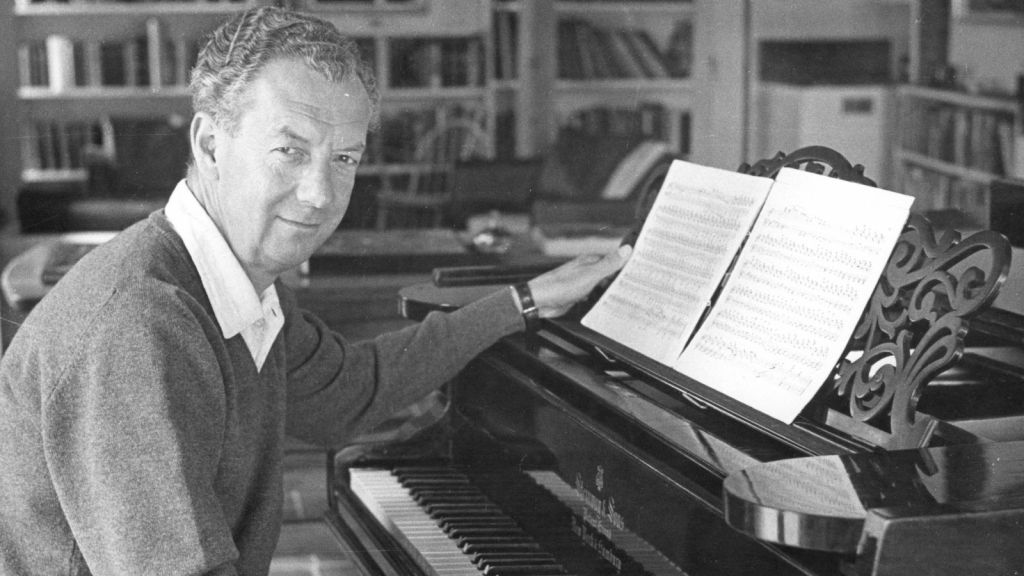
Benjamin Britten (talking to Lord Harewood, c1950)
‘The depth of his feeling of loss gave an intensity to Brahms’s work that no other imitator of the classical tradition ever reached.’
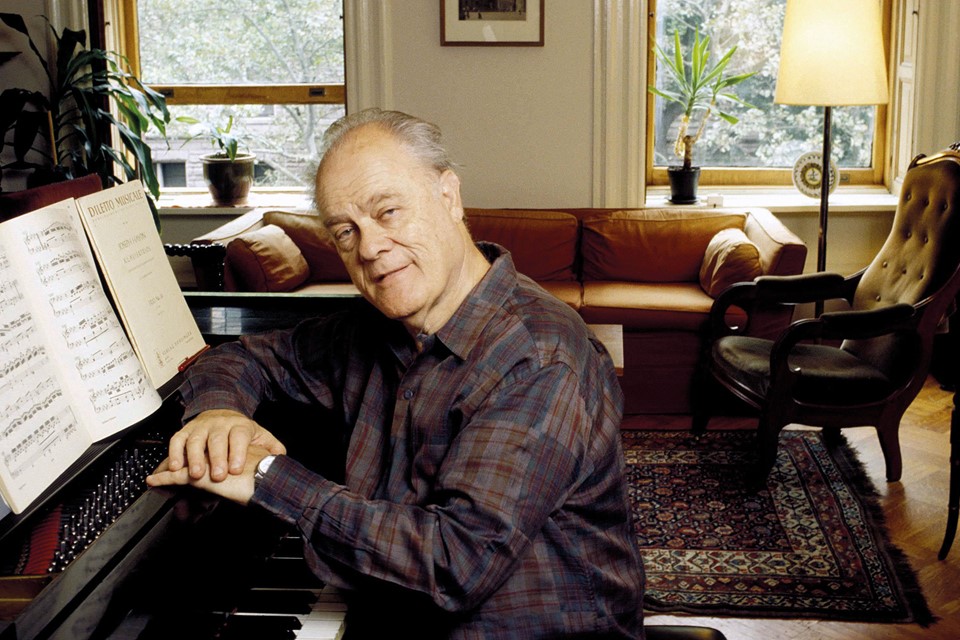
Charles Rosen
Charles Rosen (The Classical Style, 1971)




 De la música al piano