George Frideric Handel was the Baroque period’s outstanding composer of Italian opera seria (“serius opera”), while also being responsible for transforming the oratorio into an English and distinctly Protestant genre. His long, lyrical vocal lines combined with a dramatic instinct have ensured that many of his works have never lost their popularity.
Early promise
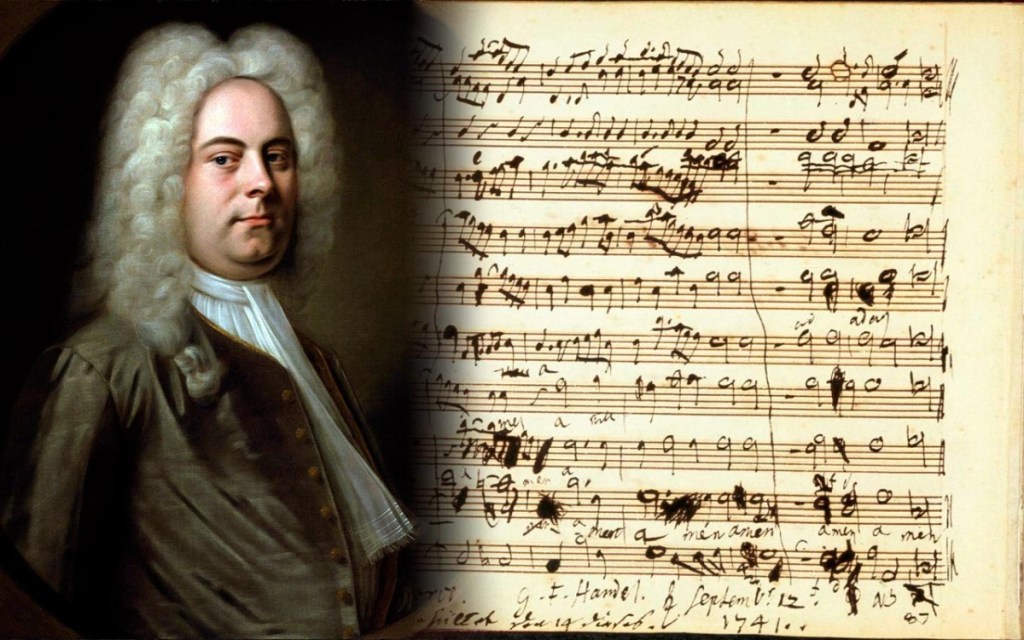
Born in the north German town of Halle in 1685, Handel showed early musical talent. His father, a surgeon at the court of Saxony, had wanted him to study law but relented under pressure and agreed to let him train with a local organist, Friedrich Wilhelm Zachow. The young Handel soon outgrew his teacher and at the age of 17 was appointed organist of Halle’s cathedral. In 1703, he left to join the orchestra of the Hamburg opera house, where he wrote his first three operas. Aware that he needed to refine his skills, Handel went to Italy in 1706 to immerse himself in composing and performing. He won acclaim in Rome, especially as a harpsichordist, sharing the honors with Domenico Scarlatti in a keyboard contest at the palace of Cardinal Ottoboni. Handel was quick to adopt the Italian vocal style, such as in the choral masterpiece Dixit Dominus. Two operas, Rodrigo in 1707, and Agrippina in 1709, added to his reputation. While in Italy, Handel was approached by representatives of the Hanoverian court, and in 1710 he became Kapellmeister (musical director) to the Elector of Hanover. The terms of his employment allowed him to travel, and within a few months he was in London, where Italian opera had taken hold. In 1713, he scored a hit with Rinaldo, which he completed in just two weeks.
Royal commissions
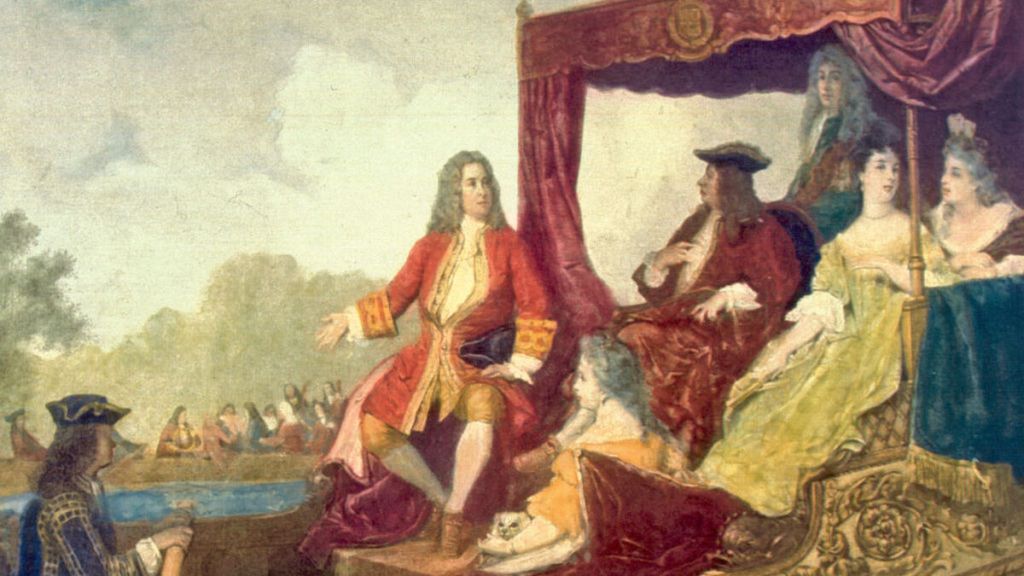
Handel’s absence from Hanover led to his dismissal, but he was reunited with his former employer when the Elector became King George I of England in 1714. Among Handel’s royal commissions were the orchestral suites, known as the Water Music, written for a royal trip down the Thames River in 1717. It was around this time that Handel became composer-in-residence to the Duke of Chandos, for whom he wrote the pastoral Acis and Galatea, the oratorio Esther, and the choral Chandos Anthems.

In 1719, a group of wealthy amateurs founded London’s first opera company, the Royal Academy of Music, and appointed Handel as musical director. He produced a regular supply of operas over the next nine seasons, including his most celebrated—Giulio Cesare in Egitto (Julius Caesar in Egypt) in 1723. Unfortunately, the Academy went bankrupt in 1728.
Handel continued to compose for royal occasions. For George II’s coronation in 1727, he composed the magnificent anthem Zadok the Priest.
The oratorios
Despite the failure of the Academy, Handel continued to produce operas throughout the 1730s, including the masterpieces Orlando (1732), Ariodante (1734,) and Serse (1738). By the end of the decade, the British enthusiasm for Italian opera was fading, and Handel turned his attention to writing oratorios in English, mostly based on Old Testament stories. Saul, in 1738, was well received, but it was Messiah, in 1742, that proved his greatest success. A celebration of Christ’s redemption of mankind, the music is wonderfully varied, ranging from the glorious melodic aria “Come Unto Me,” and the anthem “For Unto Us a Child is Born,” to the grandeur of the fugal “Amen,” with which the work closes. Several more oratorios followed over the next 10 years, among them Samson in 1743, Solomon in 1749, and Jephtha in 1752. Handel’s compositions for official occasions included, in 1749, Music for the Royal Fireworks, an orchestral suite to celebrate the Treaty of Aix-la-Chapelle, which ended the War of the Austrian Succession. At the king’s insistence, the music included “martial instruments” to accompany the pyrotechnics.
Time line
- January 23, 1685 Born in Halle, northern Germany.
- 1703 Moves to Hamburg and writes his first operas.
- 1706 Travels to Italy and stays for three years.
- 1710 Appointed music director to the Elector of Hanover.
- 1711 Travels to London.
- 1713 His opera Rinaldo is performed at London’s Queen’s Theatre.
- 1714 Elector of Hanover becomes King George I of England.
- 1717 Writes Water Music and Chandos Anthems.
- 1719 Becomes music director of the newly founded Royal Academy of Music.
- 1723 Appointed composer to the Chapel Royal and leases a house in Brook Street, now the Handel House Museum, in London.
- 1724 Writes the opera Giulio Cesare in Egitto for the Royal Academy.
- 1727 Writes coronation anthems, including Zadok the Priest, for George II.
- 1732 An expanded version of Esther is performed at the King’s Theatre.
- 1738 Becomes founding member of the Society for Decay’d Musicians. Completes Saul.
- 1739 Twelve Concerti Grossi, Op. 6, considered the finest example of the genre.
- 1742 Messiah is premiered in Dublin.
- 1743 Composes the secular oratorio Semele and the Dettingen Te Deum, the latter to celebrate British victory over the French.
- 1748 The oratorios Joshua and Judas Maccabeus are performed to great acclaim.
- 1749 Music for the Royal Fireworks is performed in Green Park, London.
- 1752 First performance of Jephtha. Failing eyesight eventually leaves him blind.
- 1759 Dies at home in London on April 14.
A national figure
Blind by the end of 1752, Handel wrote no more major works after Jephtha. He died at his home in London’s Brook Street on April 14, 1759, and was buried a week later in Westminster Abbey. He left bequests for, among others, a charity for destitute musicians and the Foundling Hospital, a children’s home where he had been a benefactor and governor and also encouraged music. Handel also left £600 for the sculpture of himself by Louis François Roubiliac, still standing in Westminster Abbey.
Key Works
- Water Music
- Giulio Cesare in Egitto (Julius Caesar in Egypt)
- Zadok the Priest
- Concerti Grossi Op. 6 (Twelve Grand Concertos)
- Messiah
- Music for the Royal Fireworks
 De la música al piano